
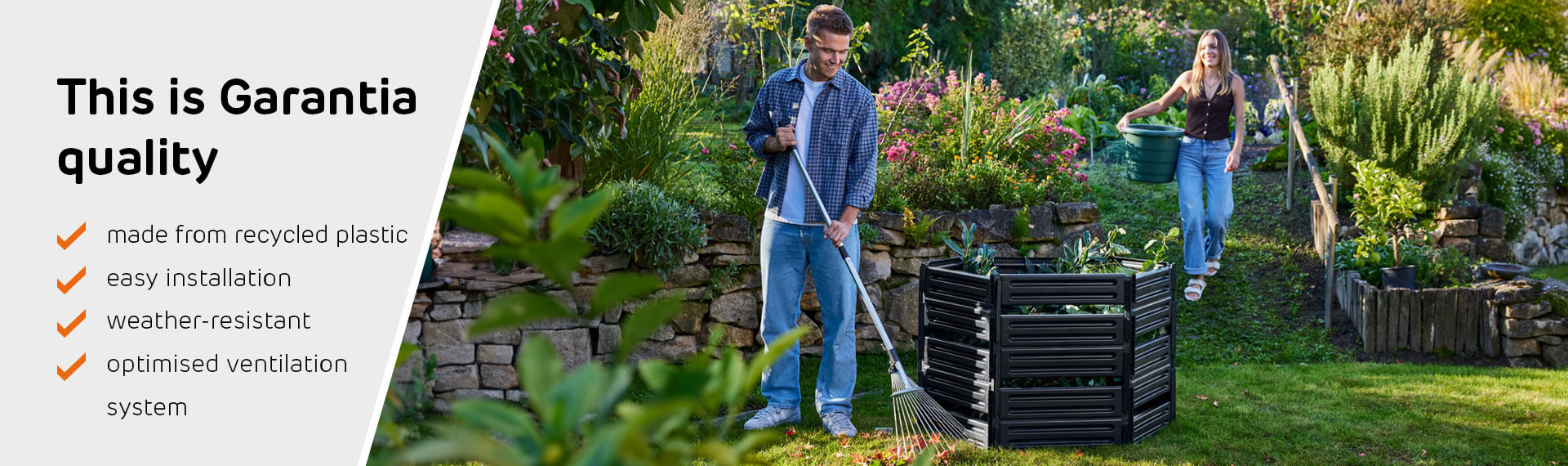
Composters
Composters enable the environmentally friendly and cost-effective recycling of organic garden and kitchen waste. Controlled composting produces nutrient-rich humus that can be used to improve soil quality and care for plants: simple, quick and cost-effective.
As well as producing nutrient-rich humus, composters also help to reduce the amount of waste. Composting reduces waste volume by up to 30%, thereby contributing to environmental and climate protection.
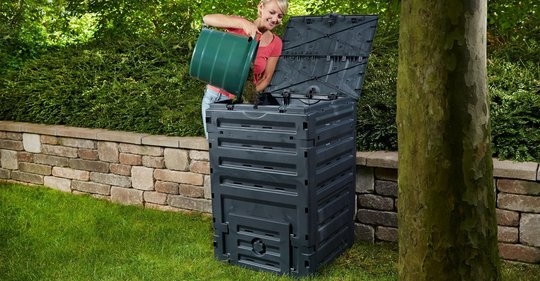
Our design highlight
For anyone who values not only functionality but also stylish design when it comes to composting.
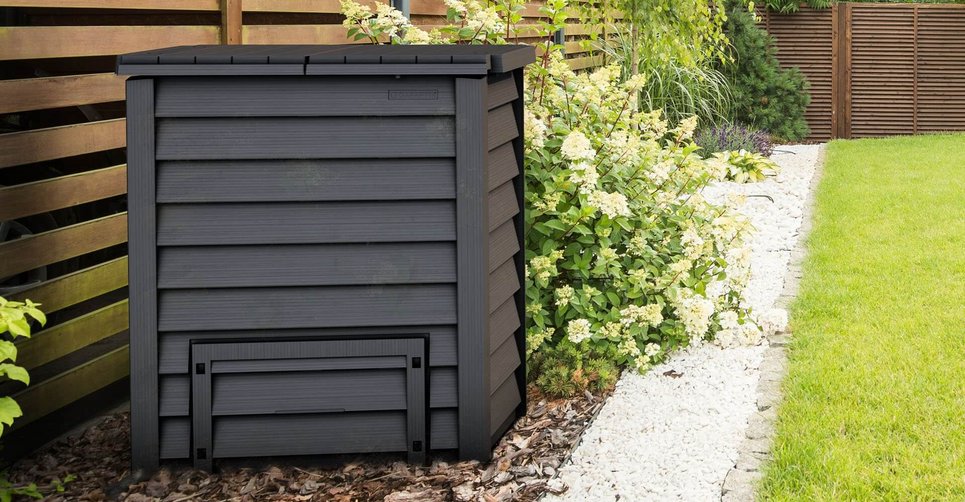
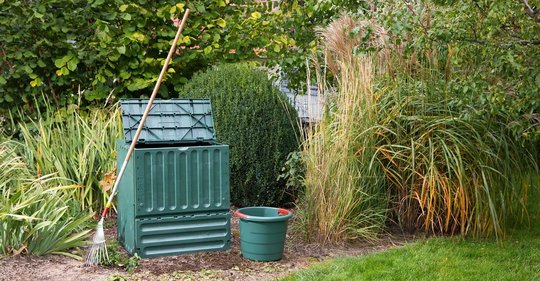
Our all-rounders
For anyone who wants to compost easily and efficiently – functional, easy to use and with a subtle, practical design.
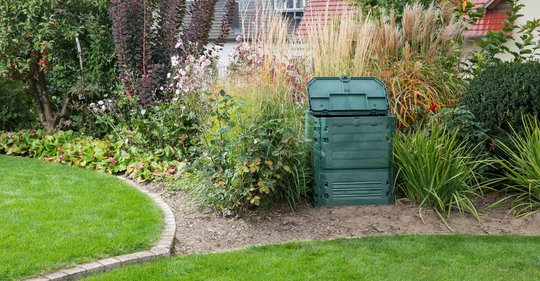
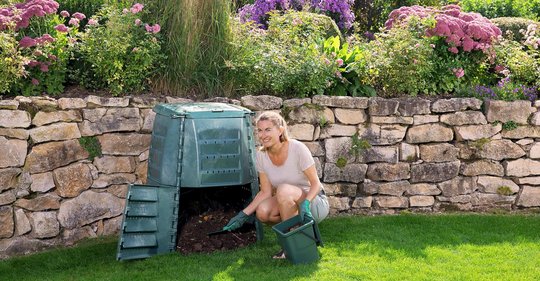
Our Basic Compost Bins
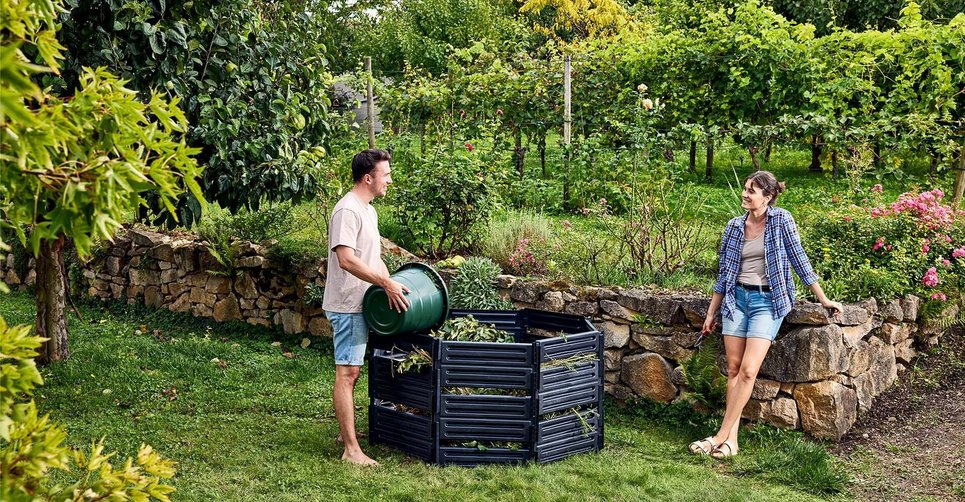
Ideal for those new to composting – simple, practical and ready to use straight away.
Kitchen compost bin
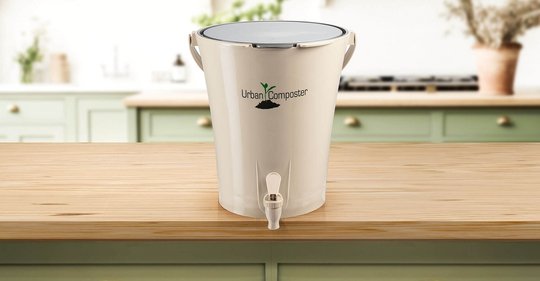
Easy composting right in your kitchen
Which size of composter is right for me?
The size that’s actually right for you depends mainly on how much material you want to compost.
Whether you want to compost just your kitchen waste or also some of your garden waste, we offer a wide range of sizes. From 280 litres (the smallest versions of the ECO Composter & Quick Composter) up to 1,000 litres or 1,100 litres (Thermo-Star or Air-King plug-in composters).
If you mainly compost kitchen waste and want to quickly produce a nutrient-rich, liquid plant fertiliser, the Urban Composter is the ideal solution. Odourless and compact, it can be conveniently placed right in your kitchen.
Easy to assemble – built to last
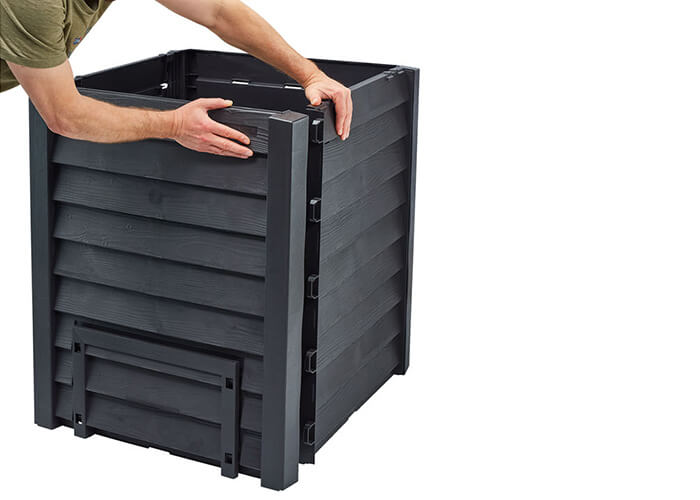
Our compost bins are characterised by their particularly simple, tool-free assembly. Our Quick Composter and the ECO Composter are made from a single piece (except for the lid and removal flap) and therefore do not require any assembly. With our other composters, the plug-in system means no screws are required, which makes assembly much easier and saves time. Furthermore, all models are made from UV-stabilised material, ensuring the surface retains its shape even with long-term use.
Sustainability
Sustainable gardening and producing valuable humus – the process of composting, as well as the end result itself, humus, is sustainable through and through. To ensure that the composter itself does not detract from the overall sustainability, our composters are made from up to 100% recycled plastic (excluding 2–3% additives, colours and labels) and can also be 100% recycled afterwards.
Further blog posts on the topic of composters

The most important questions about compost bins
-
Where should a compost bin be placed? What is the ideal location and ground surface?
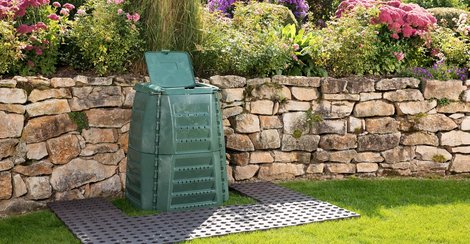
A compost bin is best placed in a semi-shaded, sheltered spot in the garden on natural, loose soil, rather than on concrete, paving or plastic sheeting. This allows earthworms and microorganisms to colonise the compost and excess water to drain away. Full sun dries out the compost, whilst deep shade slows down the composting process. It is best to keep a distance of at least 50 centimetres from the property boundary. For thermal composters, a fine-mesh ground grid is recommended to protect against voles and rats.
-
What can go in the compost bin – and what can’t?
The compost bin is for raw plant-based garden and kitchen waste such as fruit and vegetable scraps, coffee grounds, eggshells, grass clippings, leaves and prunings. Do not put cooked food, meat, fish, dairy products, large quantities of bread, cat litter, dog faeces, treated wood or diseased plants in the composter, as these attract rats or spread disease. The ideal mixture is a combination of moist green material and dry brown structural material in a ratio of about 1 to 2.
-
How do I fill and layer a compost bin properly?
A compost bin is filled in thin, alternating layers of moist, nitrogen-rich material and dry, carbon-rich material, in a ratio of about 1 to 2. A 10 to 15-centimetre-thick drainage layer of wood chips or shredded branches is placed at the bottom, with layers of grass clippings, kitchen waste and leaves alternating with wood chips or cardboard on top. A thin layer of mature compost in between speeds up the composting process. The contents should be as moist as a wrung-out sponge.
-
How can I prevent unpleasant odours in the compost bin?
Unpleasant odours in the compost bin are almost always caused by too much moisture, too much grass clippings and too little oxygen. With the right mix of damp and dry materials in a ratio of 1 to 2, and good aeration, the compost bin will remain odour-free. Allow fresh grass clippings to dry for 1 to 2 days, avoid adding cooked food, and always cover kitchen waste with soil or shredded material.
-
How do I compost grass clippings properly?
Grass clippings should be left to dry for 1 to 2 days before being incorporated, and mixed in thin layers of no more than 5 to 10 centimetres with dry material such as leaves or wood chips. Fresh grass clippings in thick layers will rot and produce an ammonia smell. The ideal mixing ratio is 1 part grass clippings to 2 parts structural material.
-
How long does it take for compost to be ready?
Depending on the system, it takes between 8 weeks and 12 months for compost to be ready. In a thermal composter, mature compost is produced in 8 to 16 weeks, whilst in an open system it takes 6 to 12 months. Mature compost is dark brown, crumbly and smells of forest floor. The process is accelerated by finely shredding the material, using a balanced mix of green and brown material, and turning the compost occasionally. Composting slows down significantly at low winter temperatures.
-
How can I speed up the composting process?
Composting is accelerated primarily by finely shredding the material, using a balanced mix of moist green and dry brown material in a ratio of 1:2, and ensuring sufficient oxygen and moisture. In an insulated thermal composter, mature compost is produced in 8 to 16 weeks. Adding two shovelfuls of mature compost from time to time introduces active microorganisms, whilst turning the compost once every 2 to 3 months provides an additional supply of oxygen.
-
What types of compost bins are there, and which one is right for me?
Which compost bin is right for you depends on the size of your garden, the amount of waste you have and how quickly you want the compost to be ready. For small to medium-sized private gardens, a closed plastic thermal compost bin is usually the most practical choice: it shortens the composting process to around 8 to 16 weeks thanks to thermal insulation, works all year round and keeps odours and pests at bay. Wooden and plug-in composters are usually large and are therefore suitable for large gardens with plenty of garden waste. Worm bins and bokashi buckets are particularly suitable for balconies and kitchens.
-
A thermal composter or an open composter – which is better?
For most households, a thermal composter is more practical than an open composter because it works faster, can be used all year round and provides better protection against odours and pests. Composting takes around 8 to 16 weeks in a thermal composter, compared with 6 to 12 months in an open composter. Open systems are particularly suitable for large gardens with plenty of garden waste and little kitchen waste. In practice, a combination of both systems can also be a good idea.
-
What is a thermal composter or rapid composter, and how does it work?
A thermal composter is a sealed composter made of insulating plastic, which traps the heat generated during composting inside, thereby significantly speeding up the process. At its core, microorganisms reach temperatures of 40 to 70 degrees, which reduces weed seeds and pathogens. Ventilation slits provide oxygen, whilst a removal flap at the bottom makes it easier to remove the compost. Ready-to-use compost is produced in 8 to 16 weeks, whereas an open compost heap takes 9 to 12 months.
-
Does a compost bin still work in winter?
A thermal composter works even in winter because its insulated walls keep the heat inside. When it freezes, the decomposition process slows down considerably, but the core usually remains active if the bin is well-filled. In winter, keep the lid closed, cover kitchen waste with leaves and do not turn the contents, so that the heat does not escape.
-
Composting on the balcony – is it possible even without a garden?
Composting is possible even without a garden – on the balcony, in the kitchen or in the cellar. This is made possible by compact indoor composting systems, in which kitchen waste is converted into compost or liquid plant fertiliser in an odour-free and space-saving way. One example is the Garantia Urban Composter, which has a 15-litre capacity and a tap for dispensing the fertiliser. This means that organic waste can be put to good use even in a rented flat.
-
Does a compost bin attract rats and mice – and how can I protect myself from them?
A properly maintained compost bin containing only plant-based waste does not attract rats. Cooked food, meat, fish, sausages and bread are the main sources of problems. The risk can be reliably minimised by using a closed thermal compost bin, a fine-mesh base grid and ensuring it is filled correctly. Kitchen waste should always be covered immediately with soil or shredded material.